1 Risk & Insurance. May 2025. “Nuclear Verdicts Skyrocket: Corporate Lawsuit Awards Surge 116% to $31.3 Billion in 2024.” Accessed April 2, 2026.
Prepared by Zywave, Inc. Copyright 2026
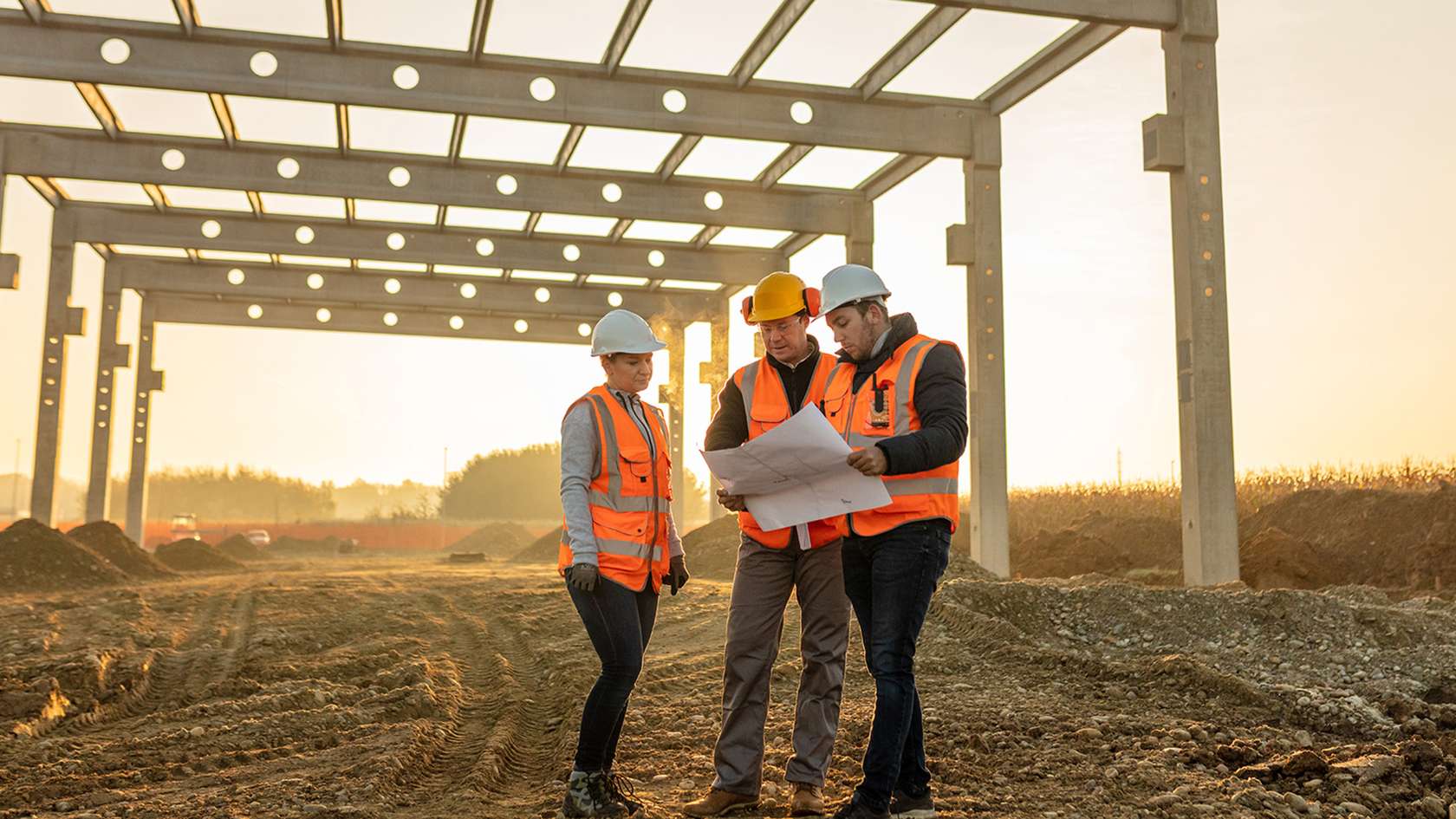
Despite various ups and downs in recent years, the construction sector has consistently driven significant economic growth, positioning contractors and project owners for success. In addition, softening conditions across much of the commercial insurance market have helped some well-managed construction businesses secure more favorable coverage terms and pricing.
Although certain segments, namely commercial auto and excess liability, remain under pressure, most lines of coverage have begun demonstrating healthy competition and capacity. However, there are still some risks that, left unmanaged, may threaten the sector’s stability moving forward. As such, construction businesses should monitor several emerging developments that could impact their operations and insurance portfolios this year—including labor challenges, valuation concerns, litigation issues and technology advancements—and adjust their risk management programs accordingly. This article outlines construction sector trends to watch in 2026 and offers strategies to help navigate them.
The U.S. workforce is aging, with baby boomers accounting for a considerable share of the labor market. This poses serious workplace safety risks, as multiple studies have found that older employees are more susceptible to severe occupational injuries and related workers’ compensation claims than their younger counterparts. Considering that the Bureau of Labor Statistics already deems the construction sector one of the most dangerous industries due to its above-average injury and fatality rates, this trend is particularly concerning. Even as baby boomers reach retirement age and exit the workforce, construction businesses will have to contend with worsening labor shortages and may have to hire less experienced employees to fill talent gaps. This carries similar safety risks, as OSHA data shows that nearly one-third of all occupational injuries and associated workers’ compensation claims stem from employees in their first year on the job. Evolving OSHA and American National Standards Institute (ANSI) guidelines on fit-for-purpose personal protective equipment (PPE) and comprehensive safety training programs may help minimize these risks; however, they also introduce new compliance considerations.
To combat labor challenges and keep workers’ compensation costs under control, construction businesses should adopt effective staff retention strategies (e.g., better working conditions, competitive pay and career growth opportunities); provide routine safety training for employees of all experience levels; and invest in technology that may help mitigate occupational hazards (e.g., wearable safety devices). Construction businesses should also ensure their occupational safety programs comply with all OSHA and ANSI standards.
Ongoing geopolitical conflicts continue to fuel supply chain difficulties, limiting availability and driving up the prices of many raw materials. Making matters worse, fluctuating tariffs on internationally sourced goods could prompt even greater supply chain concerns in the months ahead and, in turn, further exacerbate material costs. In the construction sector, these rising expenses are mainly affecting steel, aluminum, copper, softwood lumber and timber, all of which are critical building components. According to the National Association of Home Builders, tariff-induced increases in material prices could raise U.S. construction costs by millions of dollars.
With elevated material costs making projects more expensive to complete and influencing property values, construction businesses are at risk of serious underinsurance issues. Such valuation inaccuracies may be particularly prevalent among commercial property and builders risk policies. In any case, these coverage gaps could leave construction businesses with substantial out-of-pocket costs amid potential claims. To help prevent valuation concerns and related losses brought on by rising material costs, construction businesses should build strong relationships with multiple trusted suppliers; address possible delay-in-completion issues stemming from supply chain disruptions in building contracts; regularly review and update property values across applicable insurance policies; and, if necessary, invest in specialized coverage (e.g., parametric insurance) to fill gaps in protection.
In today’s litigious society, social inflation—the ever-rising costs of insurance claims and lawsuits above the general inflation rate—has become a pervasive problem for businesses across industry lines. Several factors are currently contributing to social inflation, including growing corporate distrust, a rise in alternative attorney financing strategies (e.g., third-party litigation funding) and nuclear verdicts—jury awards exceeding $10 million. According to communications firm Marathon Strategies, 135 corporate lawsuits resulted in nuclear verdicts in 2024 alone, representing a 52% increase from the previous year and amounting to $31.3 billion in total losses. While these verdicts spanned 55 different industries, the construction sector was among the top 10 contributors1.
Key causes of litigation and associated nuclear verdicts against construction businesses include third-party injuries stemming from unaddressed jobsite hazards or damages due to faulty work. When this litigation occurs, it often exceeds standard liability policy limits, potentially resulting in major financial losses for impacted businesses. Such litigation is placing the greatest pressure on the general and professional liability segments, as well as on umbrella and excess liability programs, prompting stricter coverage terms and higher premiums. As litigation issues persist, it’s imperative for construction businesses to conduct frequent inspections during projects to ensure safe jobsite conditions and quality work, coordinate with legal counsel to tighten building contracts and establish indemnity language that provides ample protection amid potential disputes, consider higher retentions for applicable liability policies, and explore alternative risk transfer solutions (e.g., captives and structured fronting) as needed.
Businesses and insurers are increasingly embracing advanced technology solutions to improve operational visibility and enable data-driven risk management. The construction sector is no exception to this trend, with many contractors and project owners investing in solutions such as telematics, drones, and smart sensors that can be attached to workplace equipment and PPE. These solutions can monitor employee behavior and the work environment in real time, allowing for prompt hazard detection and mitigation. Using the data collected by such technology, construction businesses can also better identify potential patterns among jobsite accidents and related insurance claims, adjusting their operations when necessary to prevent future losses.
When this data is shared with insurers, they can integrate it into the underwriting process and create more accurate risk profiles for policyholders. Furthermore, businesses that use advanced technology solutions are more likely to attract favorable pricing from insurers by demonstrating a clear commitment to risk management. With this in mind, it’s crucial for construction businesses to consider adopting such technology (if they haven’t already) and collaborate with insurers to make the most of the data it collects.
Several trends are currently impacting the construction sector, emphasizing the importance of staying informed and adaptive. By tracking these developments and mitigating any associated exposures, construction businesses can foster long-term growth, boost operational efficiency and address their unique insurance needs. Contact us today for additional industry-specific risk management guidance and coverage solutions.
For forward thinking coverage that evolves with you.
Tap into insights designed to help you navigate today’s decisions and tomorrow’s opportunities.



1 Risk & Insurance. May 2025. “Nuclear Verdicts Skyrocket: Corporate Lawsuit Awards Surge 116% to $31.3 Billion in 2024.” Accessed April 2, 2026.
Prepared by Zywave, Inc. Copyright 2026
The information provided in this document is intended solely for general informational purposes and is provided with the understanding that neither Huntington, its affiliates nor any other party is engaging in rendering tax, financial, legal, technical or other professional advice or services or endorsing any third-party product or service. Any use of this information should be done only in consultation with a qualified and licensed professional who can take into account all relevant factors and desired outcomes in the context of the facts surrounding your particular circumstances. The information in this document was developed with reasonable care and attention. However, it is possible that some of the information is incomplete, incorrect, or inapplicable to particular circumstances or conditions. NEITHER HUNTINGTON NOR ITS AFFILIATES SHALL BE LIABLE FOR ANY DAMAGES, LOSSES, COSTS OR EXPENSES (DIRECT, CONSEQUENTIAL, SPECIAL, INDIRECT OR OTHERWISE) RESULTING FROM USING, RELYING ON OR ACTING UPON INFORMATION IN THIS DOCUMENT OR THIRD-PARTY RESOURCES IDENTIFIED IN THIS DOCUMENT EVEN IF HUNTINGTON AND/OR ITS AFFILIATES HAVE BEEN ADVISED OF OR FORESEEN THE POSSIBILITY OF SUCH DAMAGES, LOSSES, COSTS OR EXPENSES.
Insurance products are offered by Huntington Insurance, Inc., a licensed agency and a wholly owned subsidiary of Huntington Bancshares Incorporated and underwritten by third party insurance carriers not affiliated with Huntington Insurance, Inc.
Insurance products are: NOT A DEPOSIT • NOT FDIC INSURED • NOT GUARANTEED BY THE BANK • NOT INSURED BY ANY FEDERAL GOVERNMENT AGENCY • MAY LOSE VALUE